

Summer is the season when more people lose sleep because of scorching heat and high discomfort levels. It is also an especially difficult time for people with sleep disorders.
According to a long-term study of patients with insomnia, average sleep time in summer falls by about 62 minutes compared with winter. In particular, REM sleep, which helps restore brain fatigue and supports dreaming, was found to decrease by about 24 minutes.
High humidity in the summer, including during the monsoon season, makes sleeping conditions even worse. When humidity is high, sweat does not evaporate into the air and instead remains on the skin. That not only increases the sticky, uncomfortable feeling, but also blocks the body’s cooling effect through evaporation, making deep sleep harder to achieve. To fall into deep sleep, core body temperature must drop by roughly 0.3 to 1 degree Celsius. But in tropical-night conditions, where nighttime temperatures stay above 25 degrees Celsius, the brain’s temperature-control center remains alert, creating a vicious cycle of difficulty falling asleep and frequent awakenings. Prolonged humidity and tropical nights also reduce sleep quality, while the release of the stress hormone cortisol can raise blood pressure and negatively affect immunity.
As climate change brings more hot and humid weather, demand is rising quickly for summer products that help consumers keep indoor environments comfortable.
In particular, cooling bedding that quickly draws heat away the moment skin touches it and lowers the surface temperature immediately is drawing attention. Shinsegae Casa’s Casamia recently launched the cooling functional fabric series Sierra, and sales in June were about 2.5 times higher than in May. Ace Bed’s cooling body pillow also saw sales from January to April this year rise 71.7% from a year earlier.
More than anything, newly released products are putting technology front and center to meet consumer expectations not only for cooling performance, but also for breathability, moisture absorption, and wash durability. The growing attention to the contact cooling index, or Q-max, which measures how quickly heat moves when skin touches the fabric, reflects this trend.
As a result, not only the bedding industry but also the mattress and furniture sectors are rolling out cooling bedding made with a variety of materials.
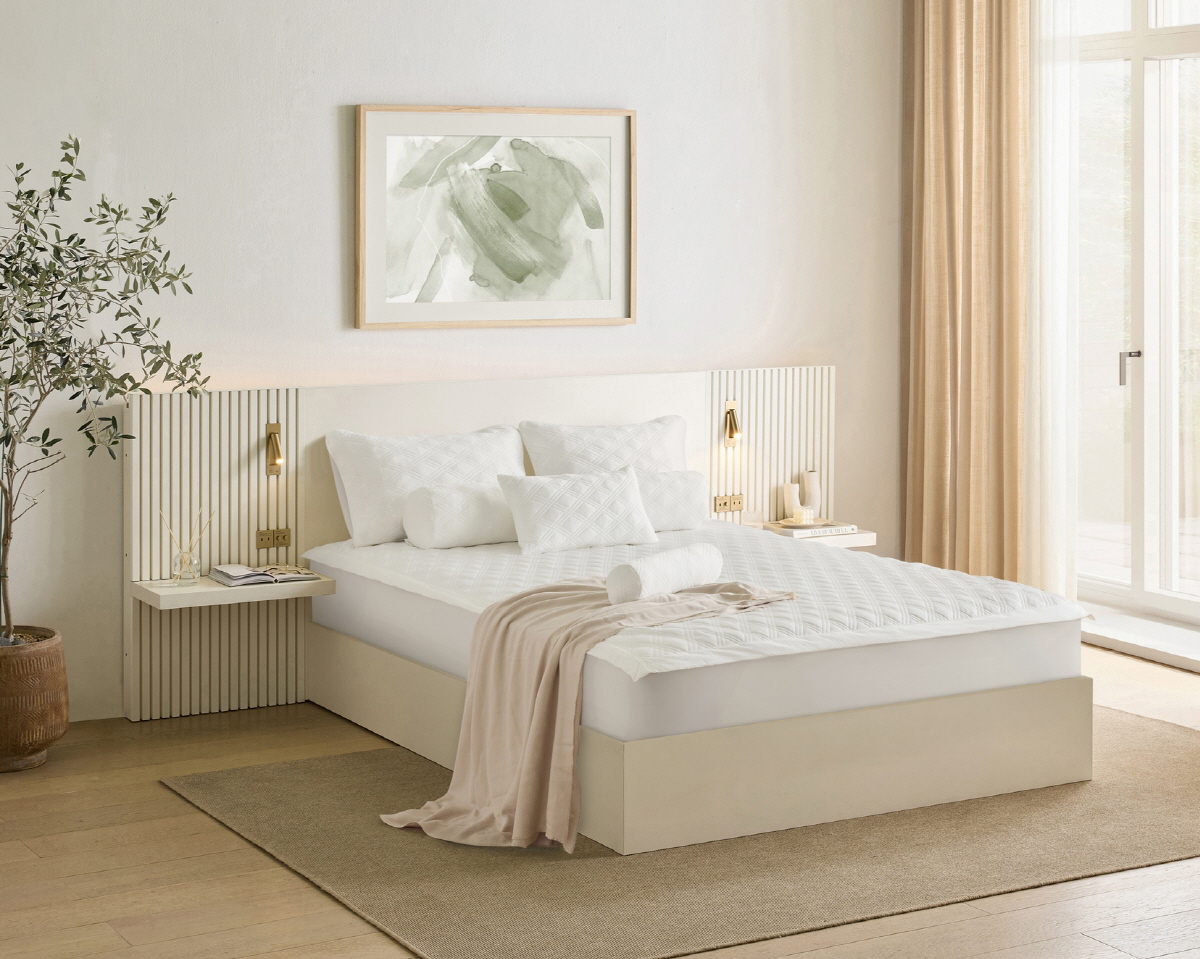
Casamia’s Sierra series uses Duraron Cool yarn, a high-performance cooling material. The company says the fabric is designed to induce thermal convection between the skin and the textile, delivering a cool touch on contact while offering excellent thermal conductivity and moisture-wicking performance. It also dries sweat and moisture quickly during sleep, and is lightweight and highly resistant to stains. The lineup includes bedding as well as a range of living-fabric products such as sofa pads and seat cushions.
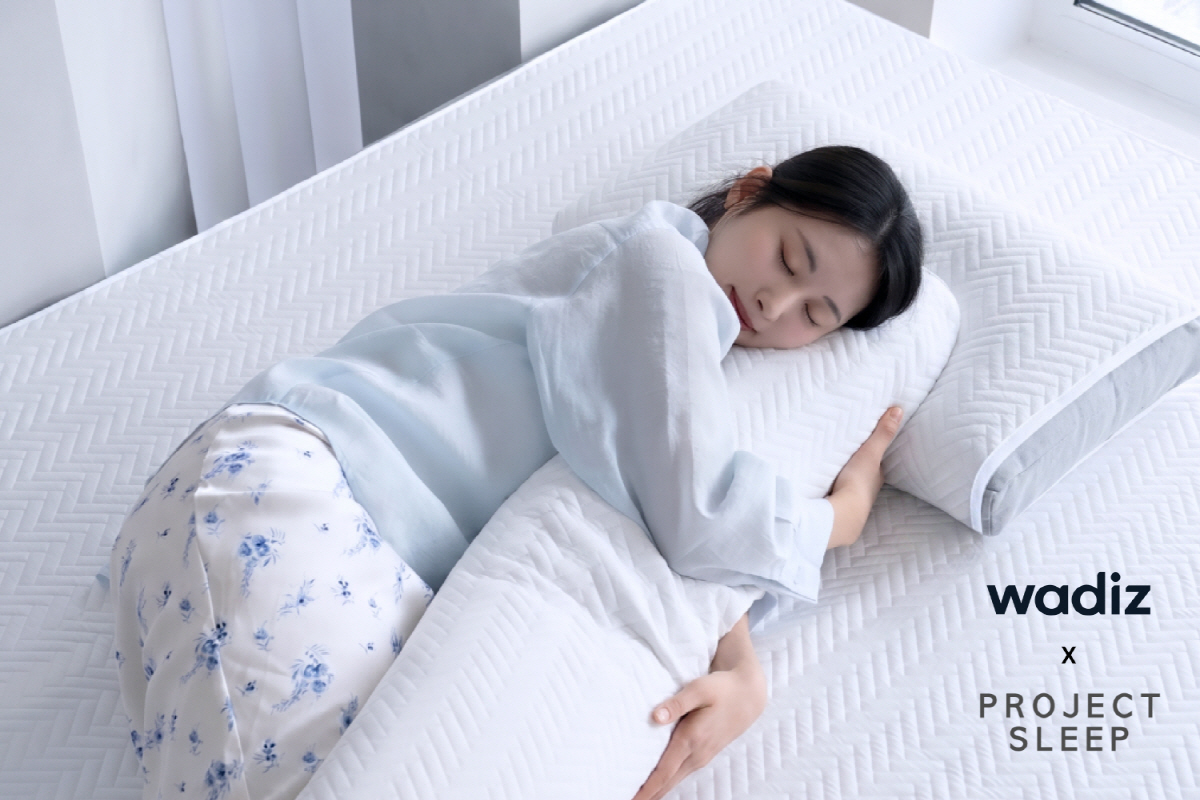
Project Sleep’s cooling bedding, introduced through Wadiz ahead of the summer season, applies temperature-responsive capsule, or TRC, technology, a new material originally developed to maintain body temperature in extreme environments such as spacesuits and firefighting gear. It offers cooling performance as well as quick-drying sweat absorption. It has also received durability certification at the level of outdoor apparel, allowing the cooling effect to last longer without pilling even after frequent washing.
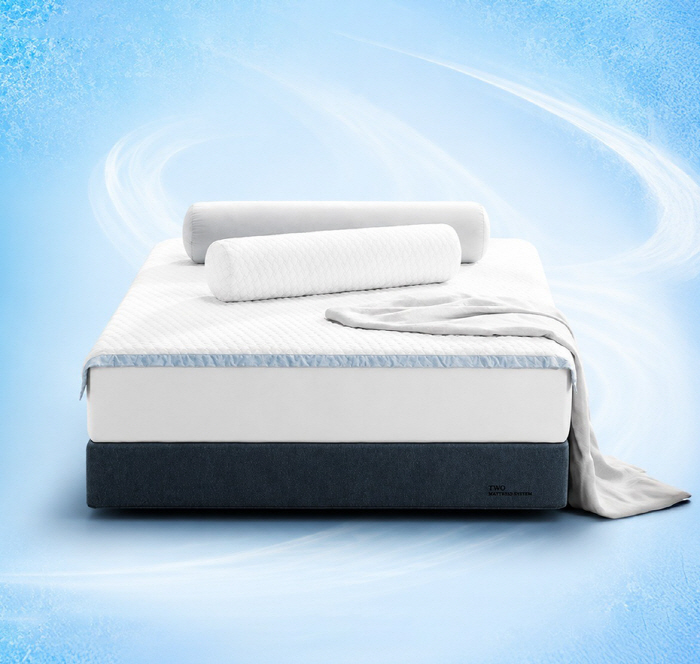
Ace Bed’s Microcare Cooling Pad uses Kolon’s Porpe cooling yarn to enhance the cooling sensation, soft texture, moisture absorption, and breathability, while also improving durability through high strength and elasticity. The company says it can help create a more comfortable sleeping environment when used together with the Microcare Waterproof Cover, which is designed to protect mattresses from water, sweat, urine, and other liquids.
Simmons introduced two cooling mattress pads and blankets that can be chosen according to temperature or personal preference. The Mattress Cooling Pad is a reversible product with cooling fibers on one side and 100% 60-count cotton on the other. The All-Season Cooling Set, which includes two pillow covers and one lightweight blanket, uses twill cooling material on one side and 100% 80-count bio-washed cotton on the other.
An industry official said, "As tropical nights become more common, bedding with cooling fabrics is rapidly expanding beyond blankets to cooling pads, cooling pillows, body pillows, and even cooling mats for pets," adding, "Retailers are also positioning cooling bedding as a cost-effective solution that helps reduce electricity use."
Meanwhile, as demand for cooling pads among cooling bedding products rises, a survey has also found that consumers need to be careful when choosing products.
A test and evaluation of 11 cooling pad products sold on the market by the Seoul YWCA and the Korea Consumer Agency found differences among products in key performance areas such as contact cooling, absorbency, and air permeability. Some products were also found to have received requests for label corrections after using expressions that could mislead consumers by exaggerating cooling functions such as lowering core body temperature.
The Seoul YWCA and the Korea Consumer Agency advised, "Because the contact cooling index, or Q-max, of cooling pads can vary depending on the test environment and temperature conditions, consumers should compare products by checking not only the numerical value, but also whether the figure is based on the finished product and whether the test temperature conditions are the same." They added, "When washing, use cold water at 30 degrees Celsius or below and a neutral detergent according to the product label. Avoid tumble dryers, boiling, and strong spin cycles. Washing on a gentle setting such as a wool cycle can help prevent reduced cooling performance and fabric deformation."
Reporter Kim So-hyung compact@sportschosun.com