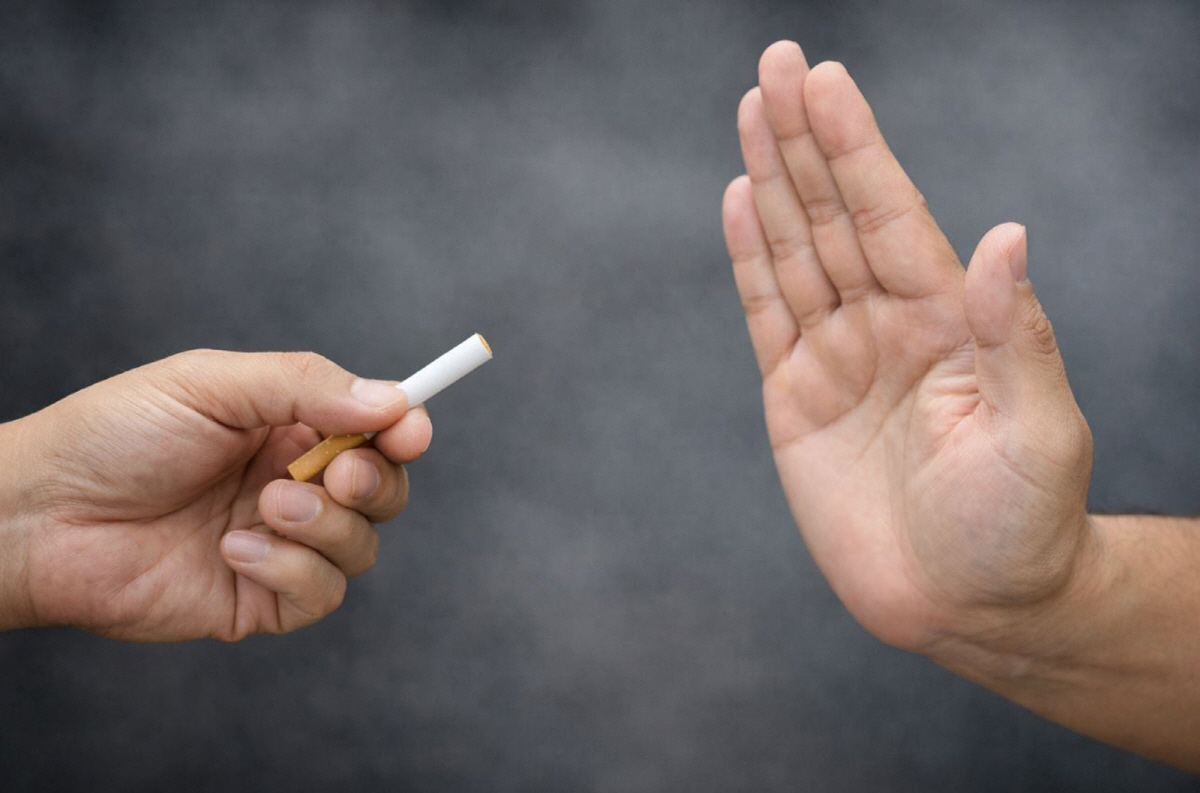
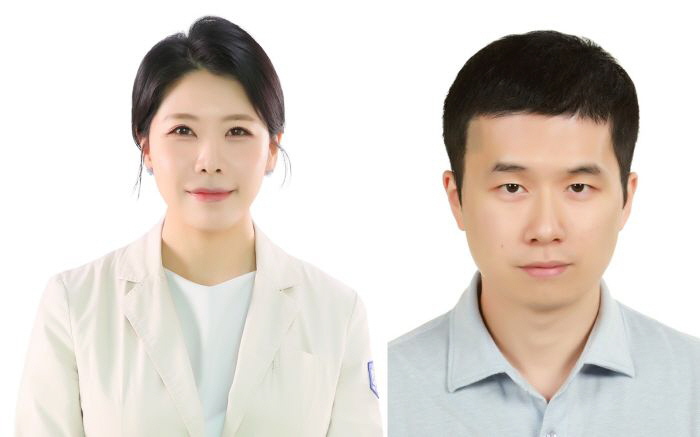
[Sportschosun Jang Jong-ho] A joint research team led by Professor Shin Hyun-young of the Department of Family Medicine at The Catholic University of Korea Seoul St. Mary's Hospital and Professor Ji Yong-ho of the Advanced Biomedical Research Institute at Ewha Womans University Seoul Hospital has recently released large-scale findings showing that smoking increases the risk of fatty liver in young adults.
Using big data from the National Health Insurance Service (NHIS), the team tracked the incidence of fatty liver through 2022 among 3,496,144 Korean adults aged 20 to 39 who underwent health checkups from 2004 to 2007. The analysis covered 61.97% men and 38.03% women. Fatty liver was assessed using the Fatty Liver Index, which is calculated by combining body mass index, waist circumference, triglycerides, and gamma-glutamyl transferase levels.
The Fatty Liver Index is scored from 0 to 100. A score below 30 indicates a low likelihood of fatty liver, 30 to 59 is an indeterminate middle range, and 60 or higher suggests a high probability that fatty liver is present.
The study found that among men, smoking 20 or more cigarettes a day raised the risk of falling into the 60-or-higher Fatty Liver Index range by 41%, while smoking for 10 to 19 years increased the risk of fatty liver by 15%. Among women, 94.4% were non-smokers, so the smoking rate itself was far lower than in men. However, in the 10- to 19-year smoking group, the risk of a Fatty Liver Index score of 60 or higher rose by 55%, a sharper increase than in men.
The association was more pronounced in groups with a body mass index below 25 or daily alcohol intake below 25 grams. By contrast, the link weakened in groups with obesity or heavier drinking.
The team explained that smoking can worsen insulin resistance and disrupt lipid metabolism, promoting fat accumulation in the liver. This is because systemic inflammation, oxidative stress, and tissue hypoxia caused by smoking are known to play a complex role in the development and progression of fatty liver. The researchers also noted that smoking may affect visceral fat distribution, and that nicotine-induced sympathetic nervous system stimulation can accelerate the development of fatty liver and liver fibrosis.
However, the team said the study has limitations, as it relied on self-reported smoking data and a single baseline measurement, leaving room for changes in smoking behavior and possible underreporting.
The findings appear consistent with previously known links between smoking and liver disease. Smoking is recognized as a significant factor not only in metabolic liver disease but also in liver cancer. The International Agency for Research on Cancer classifies smoking, along with alcohol, as a Group 1 carcinogenic factor for liver cancer.
According to the KDCA's 2023 publication "Tobacco Harm Awareness," smokers have about a 1.5 times higher risk of dying from liver cancer than non-smokers. A meta-analysis of 81 epidemiological studies also found that the risk of liver cancer was 55% higher among current smokers than among non-smokers, and up to 90% higher among heavy smokers. Smoking was shown to have a synergistic effect with obesity and alcohol consumption, further increasing liver cancer risk. The risk only fell to the level of non-smokers after more than 20 years of smoking cessation.
Professor Shin Hyun-young said, "Smoking has been confirmed to increase the risk of fatty liver in young adults independently of obesity or alcohol consumption." She added, "We expect the findings to serve as evidence for strengthening anti-smoking policies in the future to promote public health."
Professor Ji Yong-ho said, "This study is meaningful because it is based on a full analysis of NHIS screening data from healthy adults." He added, "If smoking prevention and cessation strategies are practiced from a young age, they are expected to help prevent metabolic liver disease."
The study was supported by the NRF under the Ministry of Science and ICT and was recently published in the international journal Journal of Gastroenterology and Hepatology. Co-authors included Lee Seon-ju, associate researcher at the NHIS AI Division, and Professor Cheon Ho-su of the Department of Gastroenterology at Ewha Womans University Seoul Hospital.
Jang Jong-ho bellho@sportschosun.com
This article has been translated by GripLabs Mingo AI.