As Kiwoom Securities has become embroiled in a series of investor protection controversies, CEO Eom Ju-sung's leadership is once again under scrutiny. Following a recent dispute over forced selling tied to a computer system error, the Financial Supervisory Service has launched an inspection into the sales process for JTBC's electronic short-term bonds, putting the company's consumer protection system under the spotlight as well. Legal action has also gained momentum after former Financial Supervisory Service Governor Lee Bok-hyun joined the joint legal team representing affected investors as counsel.
Since taking office in 2024, Eom has made stronger internal controls and a more advanced risk management system key priorities. However, a string of system failures and consumer protection disputes has raised questions about how effective that push has really been. Separate from the issue of legal liability, the Financial Supervisory Service inspection is expected to test not only Kiwoom Securities' internal control framework but also Eom's leadership.
According to the financial investment industry, the Financial Supervisory Service is inspecting Shinhan Investment Corp., the lead arranger, and Kiwoom Securities, the sales firm, in connection with the sale of JTBC's electronic short-term bonds. The inspection is reportedly examining the entire sales process, including whether investor profiles were properly assessed, whether suitability rules were observed, whether disclosure obligations were fulfilled, and how the online sales process was handled.
The inspection is expected to go beyond a dispute over the sales process for a single financial product and determine whether investor protection measures in non-face-to-face financial product sales actually worked in practice.
An electronic short-term bond is a digital bond with a maturity of one year or less that companies issue to raise short-term funds. The product at the center of this dispute, an asset-backed electronic short-term bond (ABSTB), is a short-term bond issued on the basis of assets. Some of the bonds issued by JTBC were sold to retail investors through Kiwoom Securities.

The controversy began when the electronic short-term bonds issued by JTBC were not repaid at maturity. It then expanded into a dispute over whether investor protection procedures were properly carried out during the sales process. As the issue became tied to the corporate rehabilitation proceedings of a JoongAng Group affiliate, the Financial Supervisory Service launched an inspection, leading to a broader review of the entire sales process.
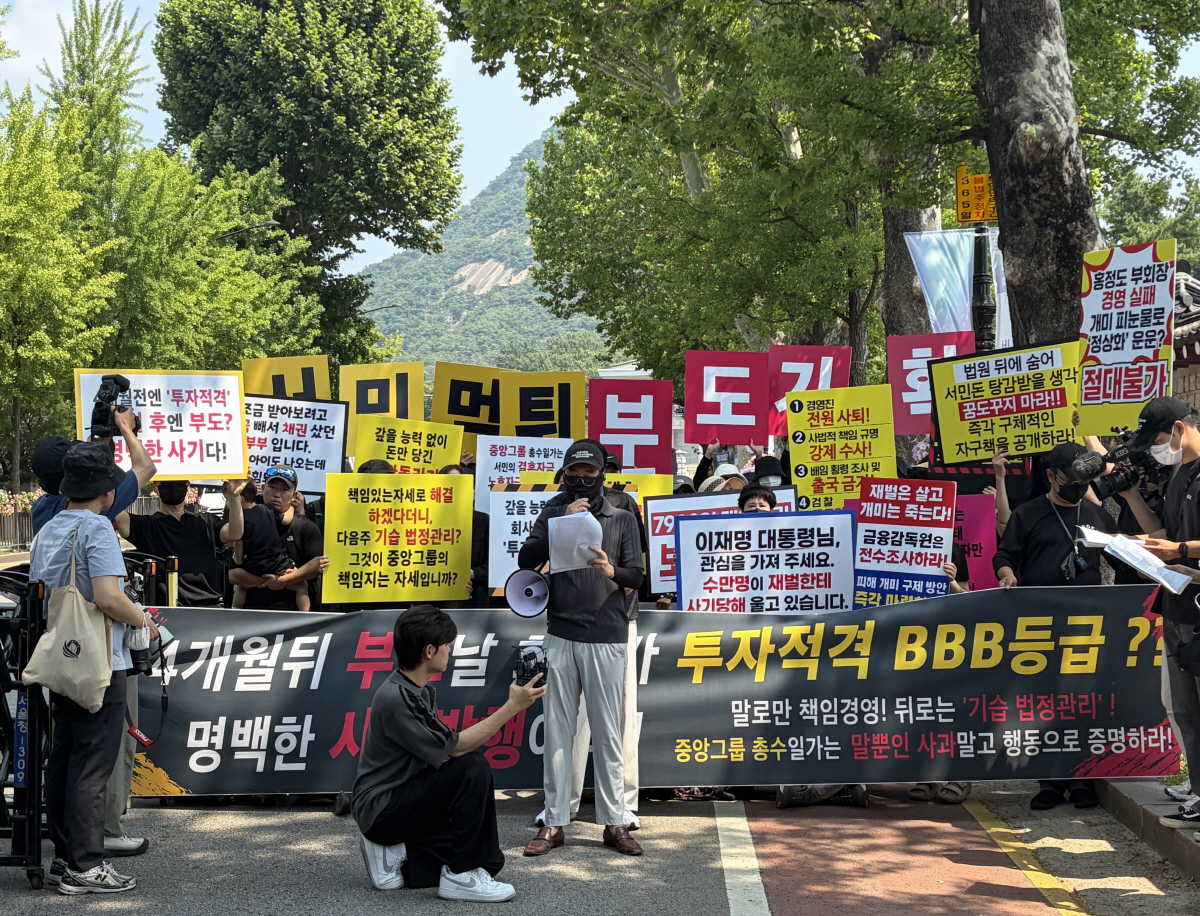
The joint legal team for affected investors recently submitted a written opinion to the Financial Supervisory Service, arguing that a thorough investigation is needed not only into the issuance of the product but also into whether the suitability principle and disclosure obligations under the Act on the Protection of Financial Consumers were properly observed during the sales process. The team also said regulators should determine whether investor protection procedures in the online sales process were merely handled as a formality.
The key issue is whether financial consumer protection obligations were fully met even in the non-face-to-face sales process. Investors argue that the product was sold without sufficient consideration of investor profiles and that explanations of the risk of principal loss and the issuer's credit risk were inadequate. They also alleged that the online sales process was operated in a way that effectively discouraged confirmation calls.
According to the legal team, about 250 investors have filed damage claims so far, with the total amount reaching roughly 32.5 billion won. The electronic short-term bonds sold to retail investors are estimated at about 76 billion won, and some of that amount was reportedly sold through Kiwoom Securities.

Kiwoom Securities, however, says the online sales process was carried out in line with relevant rules and that investors reviewed product information and investment risks before deciding for themselves whether to invest. It also said confirmation calls are not a mandatory step in online transactions.
The product disclosure document reviewed by Sportschosun classified the product as a 'somewhat high-risk' investment with a risk grade of 3. It also stated the possibility of principal loss, the issuer's credit risk, and the investor's responsibility for the investment outcome. The document also included procedures for investors to directly review the product's main risks and investment cautions, as well as confirmation steps during the online trading process.
However, the core of the dispute is that the mere inclusion of investment risks in the product disclosure document does not automatically mean the sales process was appropriate. Financial consumer protection goes beyond simply providing a disclosure document. It also includes whether the product was checked for suitability for the investor, whether the risks were sufficiently explained, and whether the process allowed the investor to make a decision with a full understanding of those risks.
Even if confirmation procedures or confirmation calls used in offline subscription processes are not mandatory in online transactions, the key criterion in this inspection is expected to be whether obligations such as the suitability principle and disclosure duties were actually fulfilled in practice.
Kiwoom Securities told Sportschosun by phone, "As the Financial Supervisory Service inspection is currently under way, it is difficult to comment on specific details," adding, "We will cooperate fully with the inspection."
Moon Ji-yeon
This article has been translated by GripLabs Mingo AI.