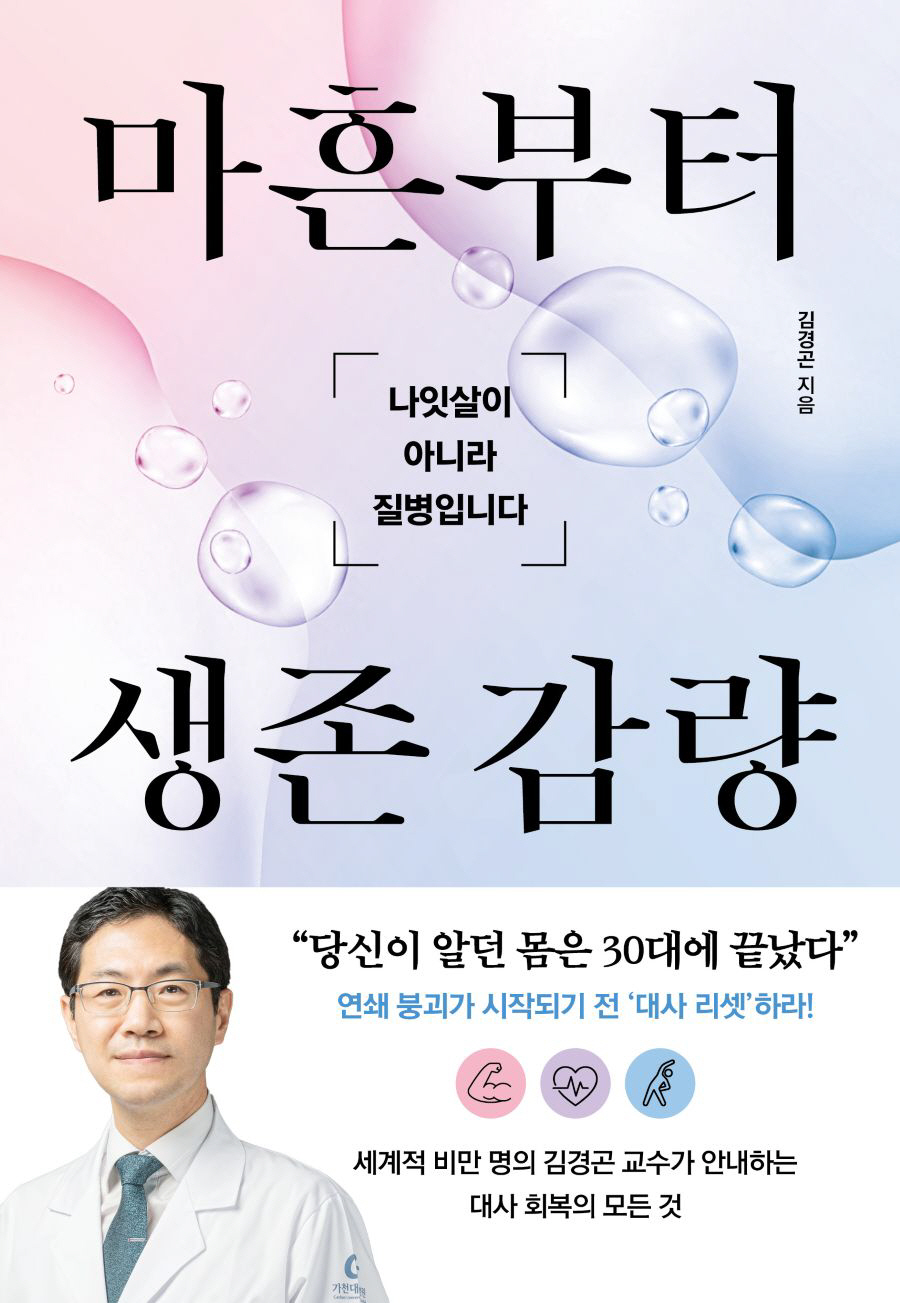


[Sportschosun Reporter Jang Jong-ho] Professor Kim Kyung-gon of the Department of Family Medicine at Gachon University Gil Hospital has published a new book, "Survival Weight Management from Forty."
It is his first solo book, distilling more than 30 years of clinical experience and the latest medical evidence from his research on obesity and metabolic diseases and his treatment of countless patients. The book views the weight gain that many people experience in middle age not as simple "aging weight," but as a warning sign that the body's metabolic system is beginning to break down. It also offers practical solutions to help extend healthy life expectancy.
As South Korea enters a super-aged society, obesity and metabolic diseases are emerging as major issues that increase not only individual health risks but also the overall medical burden on society. In particular, after the age of 40, the body's metabolic environment changes rapidly, with reduced muscle mass, hormonal changes and increased insulin resistance. As a result, people gain weight more easily and find it harder to lose it, even when they eat the same amount.
Kim explained that these changes are often called "aging weight," but in reality they mark the beginning of sarcopenic obesity, a condition in which muscle loss and visceral fat gain progress at the same time. If left unchecked, he said, the risk of various chronic diseases can rise, including diabetes, hypertension, cardiovascular disease, fatty liver, chronic kidney disease, as well as dementia and depression.
Kim said, "Weight gain in your 40s is not simply a matter of appearance, but an important signal that the body's metabolic system is losing balance." He added, "Weight management in middle age should be approached not as a diet to lose weight, but as a survival strategy to protect healthy life expectancy."
The book introduces a new concept called "Survival Weight Management," which focuses on restoring metabolic health rather than simply reducing body weight. Kim emphasized that it is more important than short-term dieting to lower body fat while preserving muscle mass and to normalize metabolic function by reducing blood sugar fluctuations.
To that end, the book details practical health habits that anyone can adopt in daily life, including eating vegetables first, then getting enough protein before eating carbohydrates last; creating a sufficient fasting window after dinner to improve metabolic flexibility; doing strength training two to three times a week along with regular aerobic exercise; increasing everyday movement through NEAT, or non-exercise activity thermogenesis; and walking with a stride that is about 10 centimeters wider than usual.
Kim also stressed that while various diet methods and obesity treatments have recently drawn attention, the most important thing is to understand one's own body and build habits that can be sustained for life. He explained that repeated extreme weight loss and rebound weight gain can worsen metabolic function and increase the risk of cardiovascular disease, making sustainable management more important than short-term weight loss.
He also advised that muscle is not just an organ for movement, but the body's most important metabolic tissue for consuming blood sugar. For that reason, he said, protecting muscle rather than focusing only on weight is the key to health management in middle age and beyond.
Kim said, "Health is not something you prepare for in old age, but an asset you build steadily from middle age." He added, "Your 40s are not the time when the body starts to fall apart, but the last golden window that determines the next 30 to 40 years of health. Changing your lifestyle now is the most effective investment for a healthy later life."
Meanwhile, Professor Kim Kyung-gon is a professor of family medicine at Gachon University Gil Hospital and a leading expert in obesity treatment and metabolic diseases in South Korea. He was the first Korean to serve as president of the Asia-Oceania Obesity Society and has remained active in research and academic work through domestic and international organizations, including the Korean Society for the Study of Obesity (KSSO) and the obesity-metabolic syndrome research group of the Korean Academy of Family Medicine. He has published more than 100 papers in the fields of obesity and metabolic disease and has contributed to the development of obesity treatment in South Korea, including participation in revisions to KSSO's obesity treatment guidelines. His new book, "Survival Weight Management from Forty," is drawing attention as a practical health guide that makes medically proven health management methods easy to understand for general readers concerned about their health in middle age, based on his research achievements and extensive clinical experience.
Jang Jong-ho, bellho@sportschosun.com