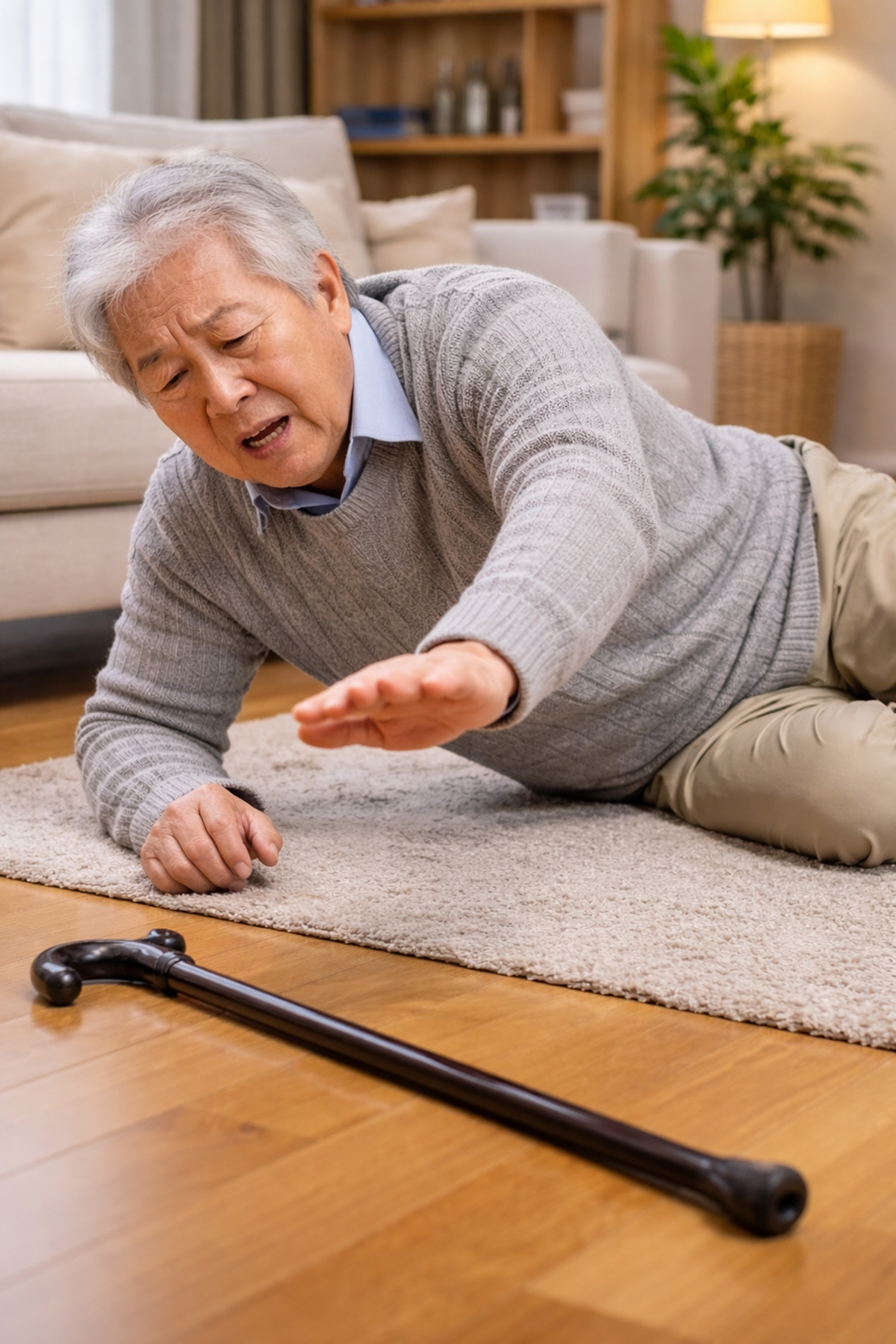
[Sportschosun Jang Jong-ho] Falls are often thought of as something to worry about only in winter, but they are also a major threat to older adults in summer. Slippery roads during the rainy season, wearing slippers, and dehydration and dizziness caused by extreme heat can combine to make even a small lapse lead to fractures or long hospital stays, making prevention especially important.
According to the Korea Consumer Agency's "2024 Analysis of Senior Injury Trends," fall accidents involving people aged 65 and older reported to the Consumer Injury Surveillance System (CISS) in 2024 totaled 11,866, up about 219% from 3,721 in 2020. By season, summer recorded the most falls at 4,817, followed by winter with 2,822, spring with 2,147, and autumn with 2,080.
Seo Dong-hyeon, head of orthopedics at Bupyeong Himchan Hospital, said, "Dehydration, low blood pressure, and less noticeable factors such as wet floors during the rainy season all combine to cause summer falls." He added, "Older adults have weaker muscle strength, balance, and reaction speed, so once they lose their center of gravity, it can lead to fractures."
◇Dehydration, low blood pressure and wet floors are causes of summer falls
During the rainy season, wet floors are a major hazard. Rain-soaked sidewalk blocks, subway stairs, building entrances and damp entryway floors can all cause slipping accidents on their own. The risk is even greater when people wear shoes with worn-out soles or slippers that do not support the heel. In rainy weather, holding an umbrella with one hand makes it harder to keep balance, and reduced visibility adds to the danger.
Dehydration caused by extreme heat is another factor that raises the risk of falls. As sweating increases, body fluid and blood volume decrease, and orthostatic hypotension can occur, causing blood pressure to drop suddenly when standing up. At that moment, if vision goes dark or the legs lose strength, the risk of falling rises sharply before the body can recover its balance. Older adults taking diuretics, blood pressure medication or sedatives may experience more severe dizziness or blood pressure fluctuations when dehydrated. In particular, when appetite and activity levels fall because of the heat, lower-body muscle strength can weaken, reducing balance and walking stability.
Excessive air conditioning and large indoor-outdoor temperature differences also require caution. After staying for a long time in a heavily cooled room and then going outside into the heat, or entering a cold indoor space while sweaty, the body regulates skin blood vessel constriction and dilation, as well as heart rate and blood pressure, to maintain a stable temperature. However, older adults have weaker autonomic nervous system responses and blood pressure control than younger people, so they may need more time to adapt to sudden temperature changes. If headaches, dizziness or fatigue occur during this process, they can lose their balance and fall even in a brief moment.
◇Falls in older adults can lead to fractures... Wear slip-resistant shoes
Falls in older adults often do not end with simple bruises. Because older adults have reduced muscle strength and reflexes, falls can lead to wrist fractures, spinal compression fractures and hip fractures. In particular, hip fractures can require a long period of bed rest after surgery, leading to secondary complications such as pneumonia, blood clots and muscle loss. They also raise the risk of losing the ability to carry out daily activities independently because walking ability declines. After one fall, reducing outings and exercise can further weaken the leg muscles, creating a vicious cycle that increases the risk of falling again.
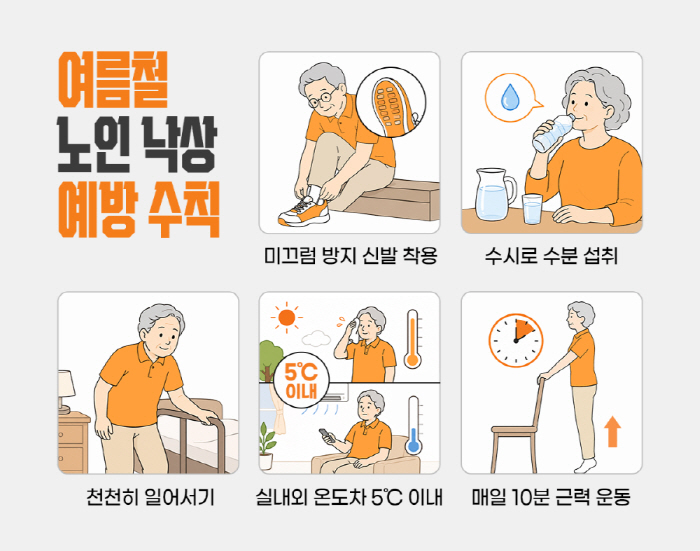
To prevent summer falls, dehydration and orthostatic hypotension should be managed first. Drink small amounts of water frequently before feeling thirsty, and cut back on excessive caffeine drinks and alcohol, which can worsen dehydration. When getting up after lying down or sitting for a long time, do not stand up immediately. Sit briefly on the edge of the bed or on a chair to give the body time to adjust, then move slowly. For older adults taking diuretics or blood pressure-lowering medication, it is safer to consult their doctor about whether the timing or dosage needs to be adjusted if dizziness or lethargy keeps recurring in summer.
During the rainy season, it is important to wear shoes with slip-resistant soles and wipe away any moisture on the entrance, stairs and bathroom floor right away. Using a raincoat instead of an umbrella can help keep both hands free and make it easier to maintain balance. In air-conditioned environments, it is better to keep the indoor-outdoor temperature difference within 5 degrees Celsius and ventilate every two to four hours to reduce the strain on body temperature and blood pressure control. It is also best to avoid going out during the hot daytime hours. If going out is unavoidable, use shaded areas to prevent body temperature from rising.
Seo Dong-hyeon, head of orthopedics at Bupyeong Himchan Hospital, advised, "For the fundamental prevention of falls, lower-body strength and balance must be managed together." He added, "Regular exercises such as walking, standing up from a chair, heel raises and standing on one leg can improve the leg strength needed to support body weight and the balance needed to maintain posture. That helps improve walking stability and reduce the risk of falls and fractures."
Jang Jong-ho, bellho@sportschosun.com
This article has been translated by GripLabs Mingo AI.