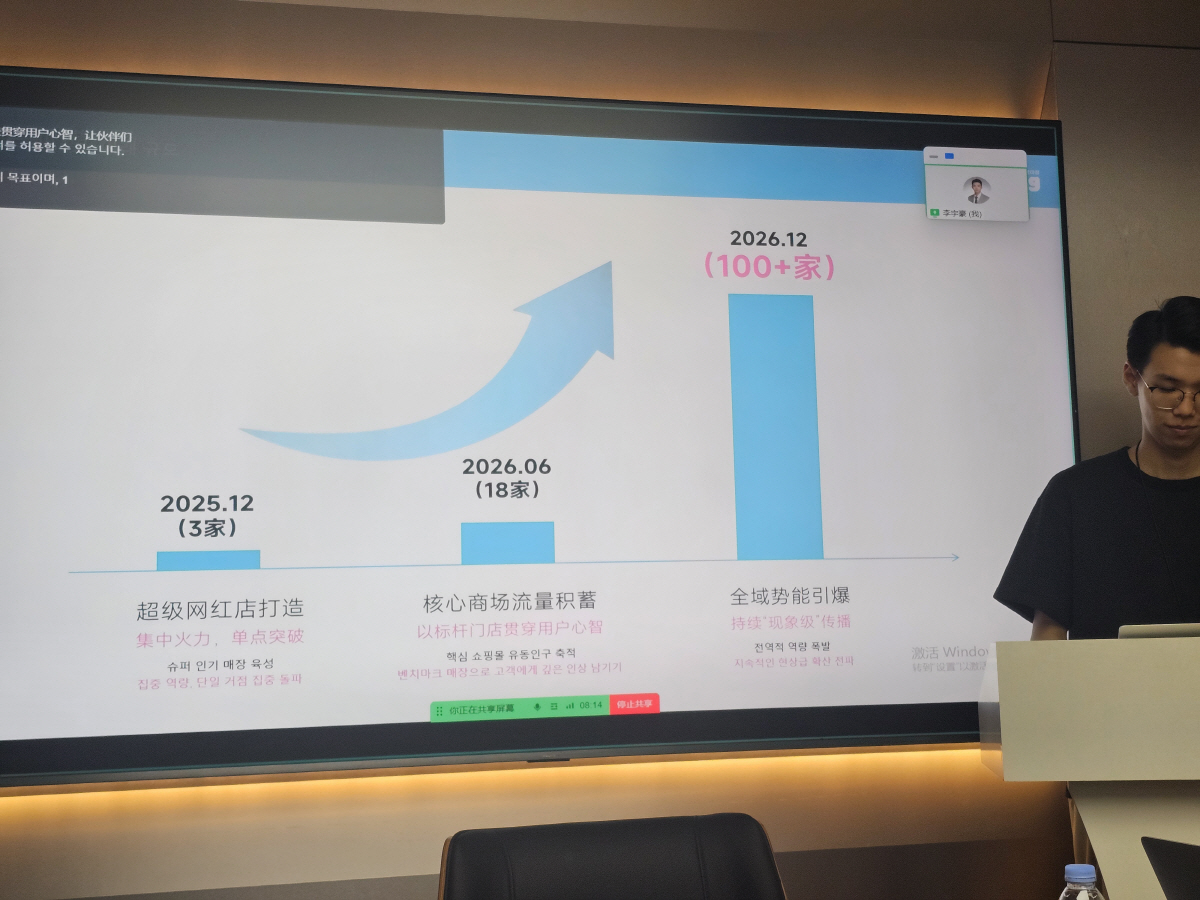
Yoajung has moved to expand into the Chinese market. It aims to open 100 stores by the end of this year in major areas including Shanghai. Since entering China last year, the brand has opened stores in premium shopping malls in Shanghai and nearby areas to build awareness. More recently, it has also drawn local attention by featuring a K-pop idol as its advertising model. Consumer response has been positive. Interest in K-food has risen as K-culture gains popularity worldwide. But that is not the only reason. In China, where people often prefer warm tea, winning over local tastes with cold desserts is no easy task. That is one reason many restaurant franchises from South Korea struggle overseas. Yoajung has adopted a localization strategy tailored closely to Chinese consumers. It has also reduced portion sizes, taking into account the fact that many people eat while walking alone. The strategy is expected to help Yoajung not only reach 100 stores in China this year, but also strengthen its position in the local dessert market.

▶A booming dessert market...building a system for quality control
Yoajung, which promotes itself as the standard for yogurt ice cream, has posted a certain level of success since entering the Chinese market last year. Its expansion into China has taken the form of a master franchise, and it made its first move in Shanghai, a test bed for entering the Chinese market. It now has 19 stores, expanding its reach to Beijing, Chongqing and Shenzhen.
A local official met at Yoajung’s China headquarters on the 29th of last month, local time, said, "We are aiming to open 100 franchise stores this year, and we believe it is fully achievable." He added that store expansion is expected to accelerate this year compared with last year. He also explained that franchise openings are being prepared in Beijing, the capital, as well as in major cities in the Yangtze River Delta, including Shanghai.
One point worth noting is China’s distinctive operating model. Yoajung’s China master franchise is run as a partnership that combines direct management and franchising.
Choi Jeong-min, co-CEO of Yoajung’s China master franchise, said, "In China, it is common for one franchise owner not to run just one store, but for the headquarters and franchisees to split equity and operate multiple stores through multi-store contracts." He added, "If the brand has strong competitiveness, it can expand store numbers quickly." He went on to say, "If Yoajung has raised brand awareness in China over the past year, we plan to expand franchises based on what we have achieved so far." He said opening Yoajung’s 100th store in China is now only a matter of time. The China master franchise has also put in place a quality control system in anticipation of rapid store growth, ensuring that all locations maintain the same operating standards.
▶Results of localization strategy...customers keep coming
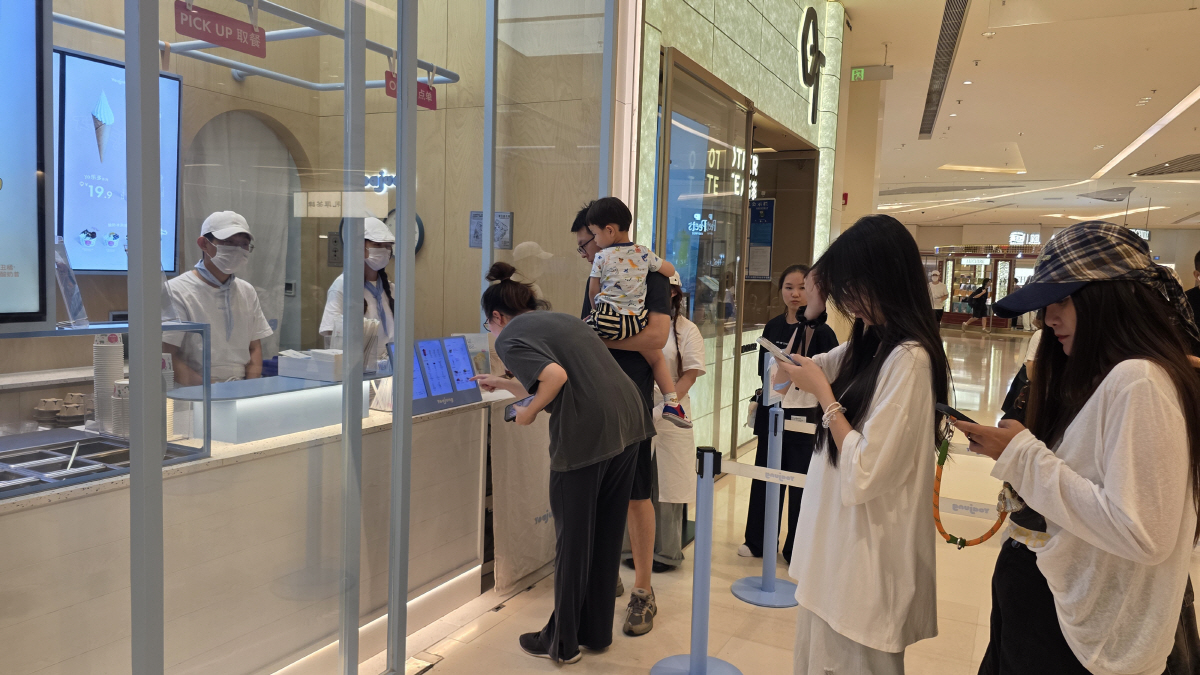
When we visited Yoajung’s first store in China, the Shanghai IAPM branch, and the store at Center Plaza in Suzhou, Jiangsu Province, last month, local consumers were still coming in. Shanghai is often seen as a test bed where global franchises gauge whether they can succeed in China. There is even a saying that if a brand becomes popular in Shanghai, it can work across the country. That is why Yoajung’s master franchise officials say opening 100 stores is only a matter of time.
Above all, China’s dessert market has been gaining momentum recently. While the old preference for enjoying desserts with warm tea and food still remains, more young consumers are now seeking something cool, such as gelato. In particular, gelato, milk tea and bakery items such as pudding are becoming popular. Brands such as Guxinyie, which highlights matcha gelato, as well as milk tea brands CHAGEE and Heytea, are representative examples. CHAGEE even opened a store in South Korea in April, underscoring just how hot the dessert market has become in China.
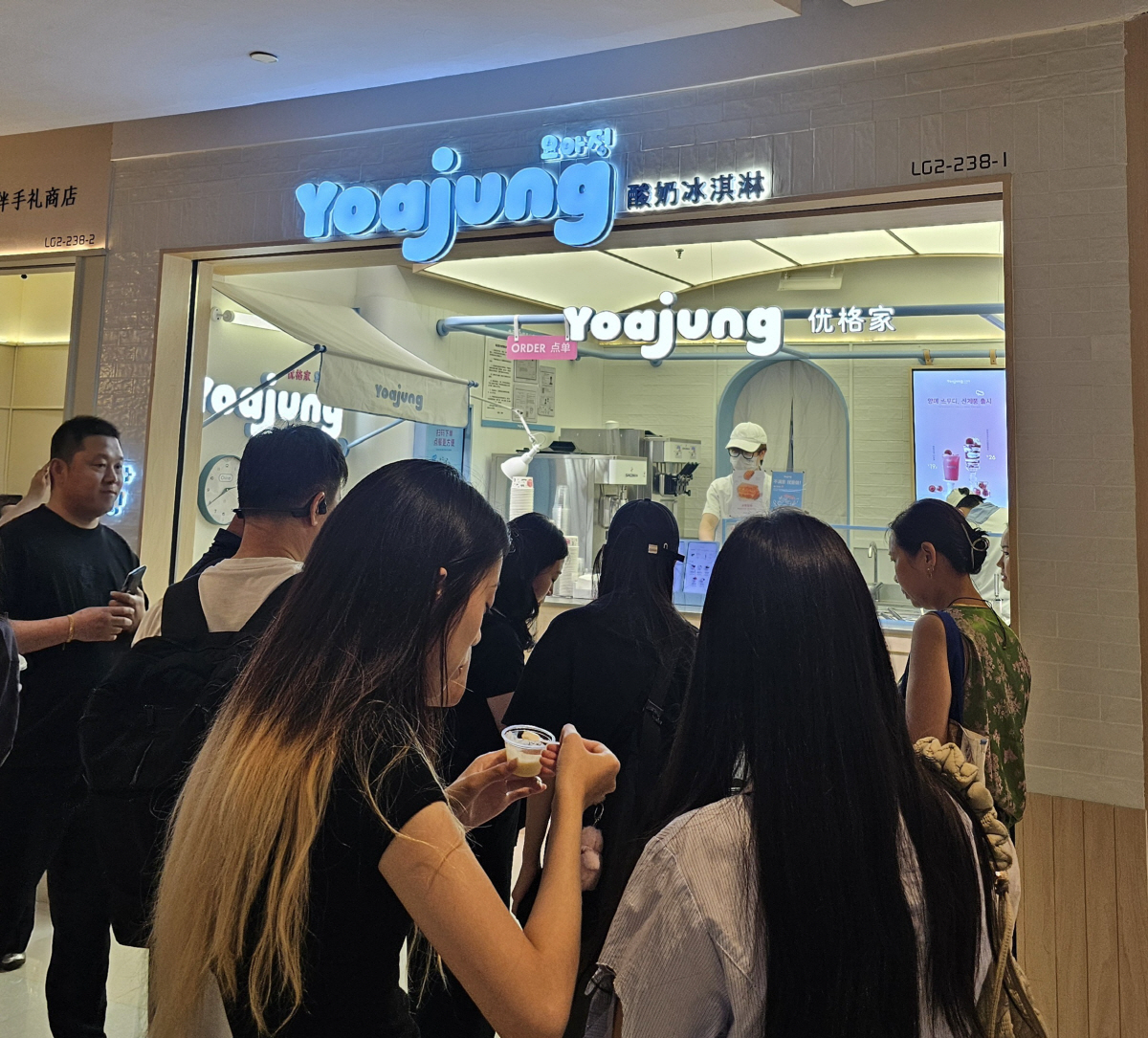
The reason Yoajung has received positive reviews from Chinese consumers is clear: localization. In South Korea, the brand focuses on the fun of choosing from 159 generous toppings. In China, however, it has adjusted its menu composition to reflect cultural differences. Taking into account the local food culture, which tends to avoid cold foods, it has introduced new smoothie-style items and reduced cup sizes to lower prices. It has also emphasized a new menu that makes use of the product’s versatility with various toppings, as well as a store atmosphere that feels clean yet cute through the use of sky blue and white. The most popular item at Yoajung stores in China is the "Jeju Hallabong Dried Cheese Ice Yogurt Shake." While the ingredients use locally sourced citrus fruit, the Korean concept built around "Jeju" and "Hallabong" is attracting consumer curiosity.
Marketing featuring K-pop idol Tomorrow X Together (TXT) has also played a role. Olivia, 15, whom we met at a Yoajung store in China, said she is a TXT fan and added, "I came here after seeing TXT members eat Yoajung." Along with consumers wearing TXT key rings, others interested in K-pop and K-dramas were also visiting Yoajung stores in China. Since Yoajung plans to begin full-scale marketing with TXT in China from July 20, local consumer response is expected to become even stronger.
A Yoajung China master franchise official said, "Chinese consumers have a high purchase rate for new things, and younger people in particular are very interested in items that are both luxurious and cute." He added, "To establish that brand image, we have been drawing consumer attention by first opening stores in major shopping malls in the Yangtze River Delta." He also said, "If we expanded stores mainly in first-tier cities over the past year, we are now broadening our reach to second- and third-tier cities, so opening 100 stores this year is fully achievable." He emphasized, "We will continue working to expand our presence in China’s dessert market."
China (Shanghai) = Reporter Kim Se-hyung fax123@sportschosun.com
This article has been translated by GripLabs Mingo AI.