[Sportschosun] A study has found that airborne microplastics that enter the human body through the respiratory system are more concentrated at night than during the day.
Inha University said on the 20th that a research team led by Dr. Yuhan Jin of the Metropolitan Area Fine Dust Research and Management Center and Professor Jeon Gi-jun of the Department of Environmental Engineering identified the concentration, size distribution, and day-night variation of airborne microplastics in the Incheon area.
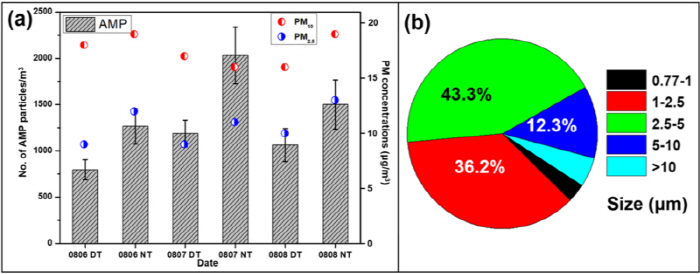
The team collected and analyzed daytime and nighttime air samples in Incheon and found that the average concentration of airborne microplastics was about 1,300 particles per cubic meter.
In particular, nighttime concentrations were about 60% higher than daytime levels, and about 95% of the detected microplastics were smaller than 10 μm, a size that can enter the human body through the respiratory system.
Microplastics generally refer to plastic particles smaller than 5 mm. As studies have recently reported microplastics in human blood, lungs, and placenta, attention has expanded beyond environmental concerns to health risks. In particular, airborne microplastics can enter the body directly through the respiratory system, drawing attention as a new research topic in air quality studies.
However, research on the concentration levels of airborne microplastics and how they change by time of day has been relatively limited. In response, the team analyzed the particle count concentration and size distribution of microplastics in air samples collected in Incheon.
The results showed that a large share of airborne microplastics were small enough to be inhaled by humans. About 95% of the detected microplastics were 10 μm or smaller, and about 40% of those were found to be at the level of ultrafine dust (PM2.5). This suggests that most airborne microplastics may enter the human body through the respiratory system.
The concentration of airborne microplastics was also higher at night than during the day. The researchers said this appears to be influenced by weather conditions, such as reduced vertical mixing of air and stagnant atmospheric conditions at night. This indicates that airborne microplastics are not merely pollutants suspended in the air, but can also change in concentration and movement depending on weather conditions, much like fine dust and other common airborne particles.
The team also suggested that major sources of airborne microplastics may include not only the direct fragmentation of plastic products currently in use, but also the resuspension of microplastics accumulated in soil, roads, and the ocean. Resuspension refers to particles that had settled on the ground or roads being lifted back into the air by wind or vehicle movement.
Dr. Yuhan Jin explained, "This study is an example showing that the concentration of airborne microplastics can vary greatly depending on weather conditions and changes in the atmospheric environment," adding, "To understand the behavior of airborne microplastics, long-term observations linked with fine dust research and source identification are needed."
Professor Jeon Gi-jun said, "Airborne microplastics are a newly emerging particle-type pollutant that still lacks environmental standards or a management system," and added, "Going forward, research on concentration monitoring, health impact assessment, and the development of standard analytical methods must continue."
The team plans to carry out a nationwide joint observation campaign on airborne microplastics this year with city and provincial health and environmental research institutes to identify regional distribution patterns across South Korea.
The study was supported by the Ministry of Environment, Incheon Metropolitan City Government, and the National Research Foundation of Korea (NRF). The findings were recently published in the international journal Environment International.
Jang Jong-ho, bellho@sportschosun.com
This article has been translated by GripLabs Mingo AI.